Manchester University's Community Wasp Survey Project Enters Third Year
North Manchester, IN (07/21/2025) — In July 2023, members of the Manchester University Center for Environmental Resilience and Social Engagement launched the "MU Wasp Team" to document wasp species found in North Manchester and, when necessary for safety, remove wasps from properties in North Manchester. In the first two years of the project, more than 400 wasp, hornet and yellowjacket nests were removed at no cost to residents.
The "Wasp Survey Team" (WST) is made up of Manchester University students, staff advisor Colleen Caylor, and faculty advisor Dr. Katy Gray Brown. The team is trained and mentored by a local business, Green Wasp Removal, to identify and collect local eusocial wasp species (paper wasps, yellowjackets, hornets).
The WST also oers many free wasp removal services upon request to residents in the North Manchester 46962 zip code. Homeowners outside of the 46962 service area are referred to Green Wasp Removal for contracted services. Removal services involve strictly "green" methods - environmentally responsible protocols - which entirely avoid toxic pesticides in favor of ecologically healthy natural control techniques. Part of the mission of the MU Community Wasp Survey Project is to educate the community about the beneficial nature of wasps and ways to eectively control unwanted wasps without the use of toxic pesticides.
At the end of the wasp season, the wasps collected by the team will be shipped to a venom collection company that provides wasps to biomedical labs for use in Venom Immunotherapy (VIT). VIT is a life-saving medical treatment for people with severe/lethal venom allergies. VIT has a 98% success rate in reducing or eliminating venom allergies, thereby preventing medical emergencies before they can occur.
Wasps are important beneficial insects in the environment. They are helpful pollinators and exceptional biological control agents that help keep pest insect populations under control throughout the summer and fall months. Wasps hunt many species of pest insects and feed them to their young for protein, and this activity results in a healthier ecosystem. It is important to recognize wasps as the beneficial insects they are. The WST encourages residents to avoid poisoning or eliminating wasps if there is any way they can be spared, however if you have a wasp nest that needs to be removed immediately, please contact the MU Wasp Survey Team to handle the removal without toxic chemicals that are harmful to people, pets and the environment.
To learn more about the project, report wasp activity, or for general comments/inquiries, please contact the MU Community Wasp Survey Project Hotline at 260-982-5136.
Media Attachments
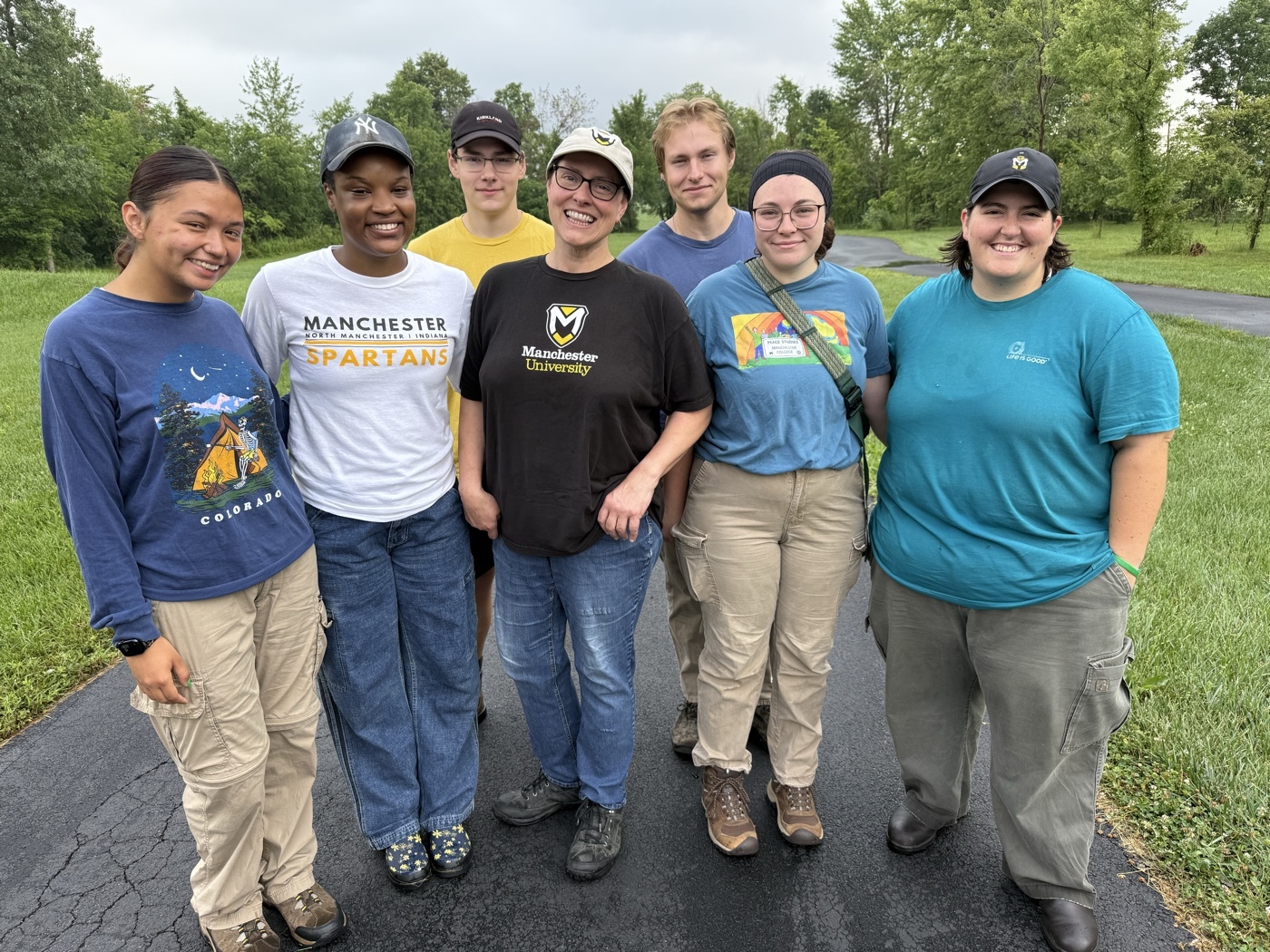
From left to right: CoCo Rosales, Micah Taylor, Milo Hupp, Prof. Katy Gray Brown, Sam Hupp, Elise Harter, Colleen Caylor
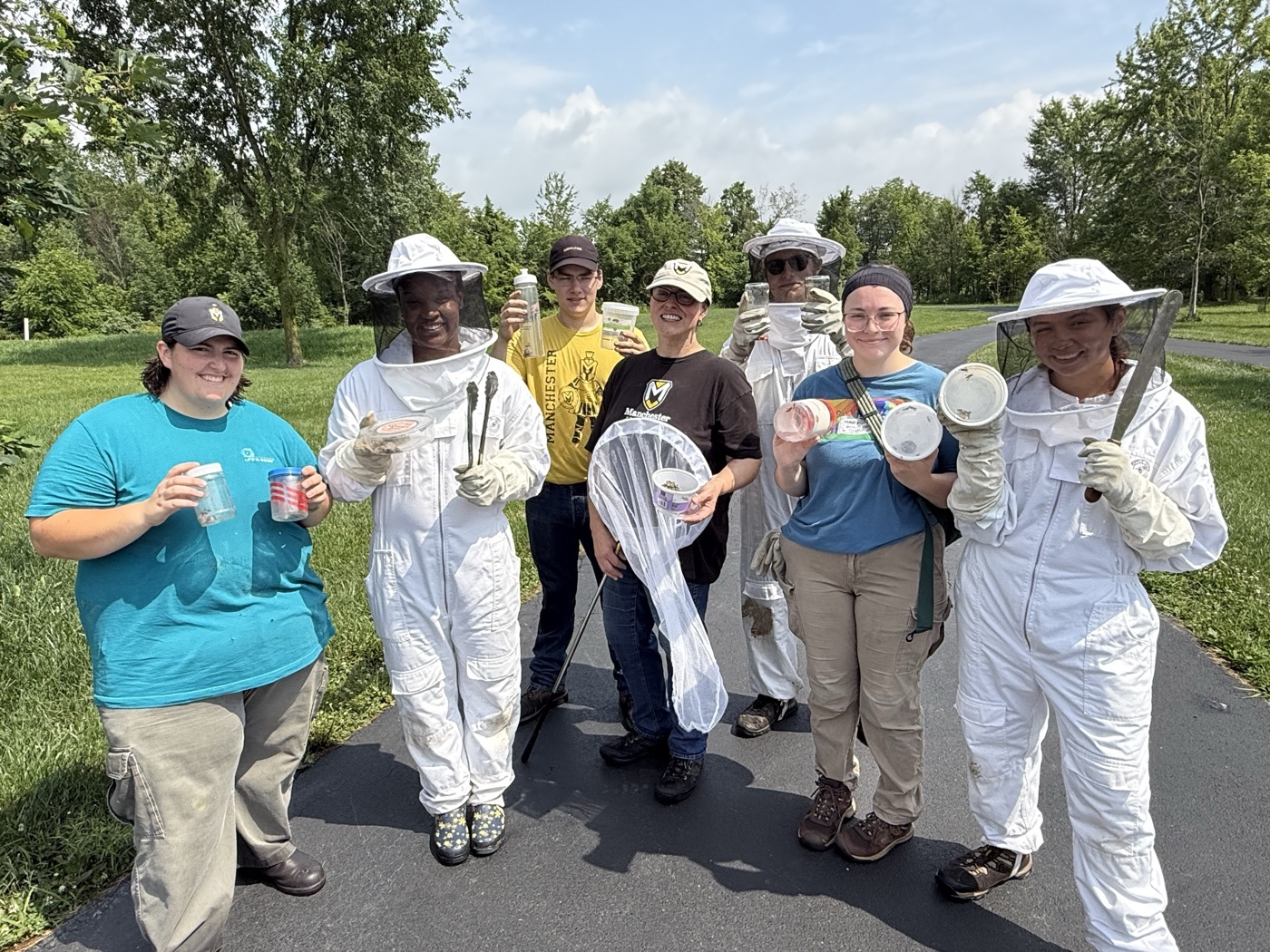
From left to right: Colleen Caylor, Micah Taylor, Milo Hupp, Prof. Katy Gray Brown, Sam Hupp, Elise Harter, CoCo Rosales

Manchester University
Chloe Leckrone, cnleckrone@manchester.eduShare this Story


Recent News
- Manchester University Homecoming and Family Weekend 2026 is Oct. 16-17
- Manchester University announces 2026 Alumni Honor Award recipients
- Manchester University Ratified for NAIA Membership; A Win for Spartan Student-Athletes and Families
- MU alumna, board member receives Distinguished Service Award from Indiana Society of Anesthesiologists
- Manchester University invites prospective students to fall visit days
- MU communication studies professor earns endowed position
- Manchester University becomes Crossroads League's 11th member institution, first new member since 2010
- Manchester University Announces Fall 2026 VIA Lineup
- Manchester University names Elizabeth Marsch executive director of online education
- MU Regional Student Environmental Conference is free to students, educators